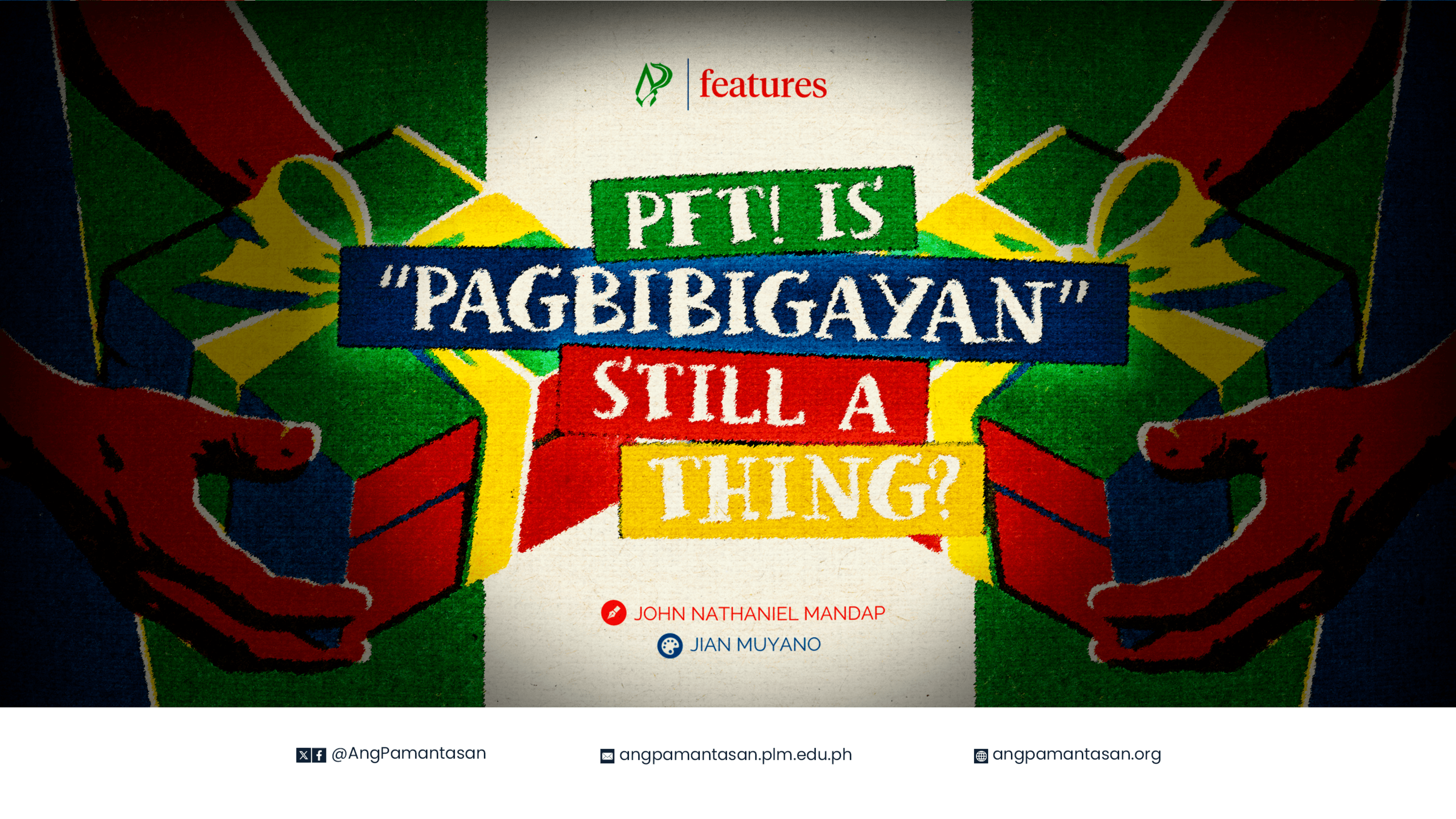
Pft! Is “Pagbibigayan” Still a Thing?
Written by John Nathaniel Mandap • Board by Jian Muyano | 25 December 25
Every December, the phrase slips out almost automatically: “Small gift lang ha.”
It’s said casually, sometimes with a laugh, sometimes as reassurance, as if calling it “small” makes the expectation easier to carry. And maybe it does, briefly. But the expectation itself stays put.
Because small or not, the message is clear: may regalo pa rin.
As the year winds down, calendars fill holiday parties, Simbang Gabi schedules, and family Noche Buena plans. Somewhere in between, a gift exchange appears. The pressure does not arrive loudly. It settles in quietly, dressed as something harmless.
This year, that pressure found a new form.
Parol, Pabitin… and the Gift Dilemma
TikTok’s “small gift exchange” has quietly taken over group chats in 2025. What used to be a simple exchange now comes with a few added twists. There are rules to follow, categories to assign, and budgets to manage. Giving a gift has now become a kind of activity—a mini-game amidst the holiday rush.
Some groups keep things straightforward, gifting the same reliable item to everyone. Others lean into playfulness. Gifts are matched to initials, categories assigned per person, or surprise items added just for laughs—the kind that would survive a round of “bring a small pasalubong” or a chaotic office party. The whole exchange feels lighter, almost effortless and even fun.
The trend works because it makes gift-giving feel manageable, less serious, almost like adding another Christmas decoration or a quick “pandesal run” to the routine.
But apart from the fun, a quiet assumption lingers. Participation is expected. Saying “small gift lang” softens the ask, but it does not remove it. The expectation stays, only now it feels easier to accept.
Regalo Roulette: Who’s In, Who’s Out?
This dynamic is not new. In the Philippines, gift-giving has long been more than a personal choice. It is part of how relationships are maintained. Long before malls, online trends, and TikTok challenges, giving functioned as social glue.
Anthropologist Marcel Mauss once described gifts as part of a cycle: to give, to receive, and to return. A gift is never just an object. It carries meaning, and with it, obligation. Local concepts like utang na loob and pakikisama echo this logic. Giving becomes a way of saying, “I remember you, I care, you belong.”
Not giving, even unintentionally, can be perceived as a sign of distance. A missing pasalubong, a skipped office exchange, or a forgotten hamon at Noche Buena can speak louder than its absence. Opting out is rarely simple. Saying “wala muna” is not just about money; it is a social decision. Often, participating feels easier than explaining.
The effort behind every gift is often invisible. Beyond the price tag lies mental work. Budgeting, overthinking, deciding what feels appropriate, and worrying if it will be enough. For students and young adults, December quietly becomes a season of calculation.
Who should be included? How much can be stretched? Who might understand being left out? The same energy spent choosing lechon cuts or arranging the right number of puto bumbong at the table now extends to “small gift” decisions.
Letting Giving Be a Choice Again
Reassurance is easy to find. Social media and lifestyle content timelines with gift ideas that are cute, functional, and easy on the wallet. You don’t need to spend much to show you care. Comforting, yes. But underneath, the familiar assumption remains: giving, in some form, is still expected.
Trends like the small gift exchange do not create pressure—they reshape it. Obligation becomes play. Expectation feels lighter. Gifts may be smaller, rules more creative, but the need to give remains.
This is not an argument against gift-giving. Gifts can be thoughtful, meaningful, even joyful. They strengthen bonds and mark shared moments. Tension arises only when giving stops feeling like a choice and starts feeling like a requirement. When the act becomes less about intention and more about keeping up.
Perhaps the real question is not whether gifts are good or bad, but whether generosity has been overly narrowed. In focusing on objects, other forms of giving are often overlooked, such as time, presence, help, and attention. These do not come with wrapping paper, but they usually carry more weight.
So when December comes around, and the familiar line appears again, “small gift lang,” it may be worth pausing. Not to reject the tradition outright, but to ask honestly: Para kanino ba ang regalo? Is it an expression of care, or simply a way to meet an expectation?
Because generosity, when forced, loses its meaning. And perhaps the most generous thing this season is allowing giving, in whatever form it takes, to remain a choice.