Pax or Faux Silica?
Written by John Nathaniel Mandap • Boards by Shaquel Agumbay | 30 July 26
The next thing that could change the Philippines may not even pass through its port or fly across its skies. It may arrive as lines of policy, billions in investment, and rows of servers humming behind concrete walls.
Quietly, almost unnoticeably, the country is being asked to build a different kind of future—one powered not by smokestacks or assembly lines, but by data.
However, before debating whether Pax Silica is worth embracing or resisting, it helps to picture what it actually hopes to build.
Progress Comes at a Price
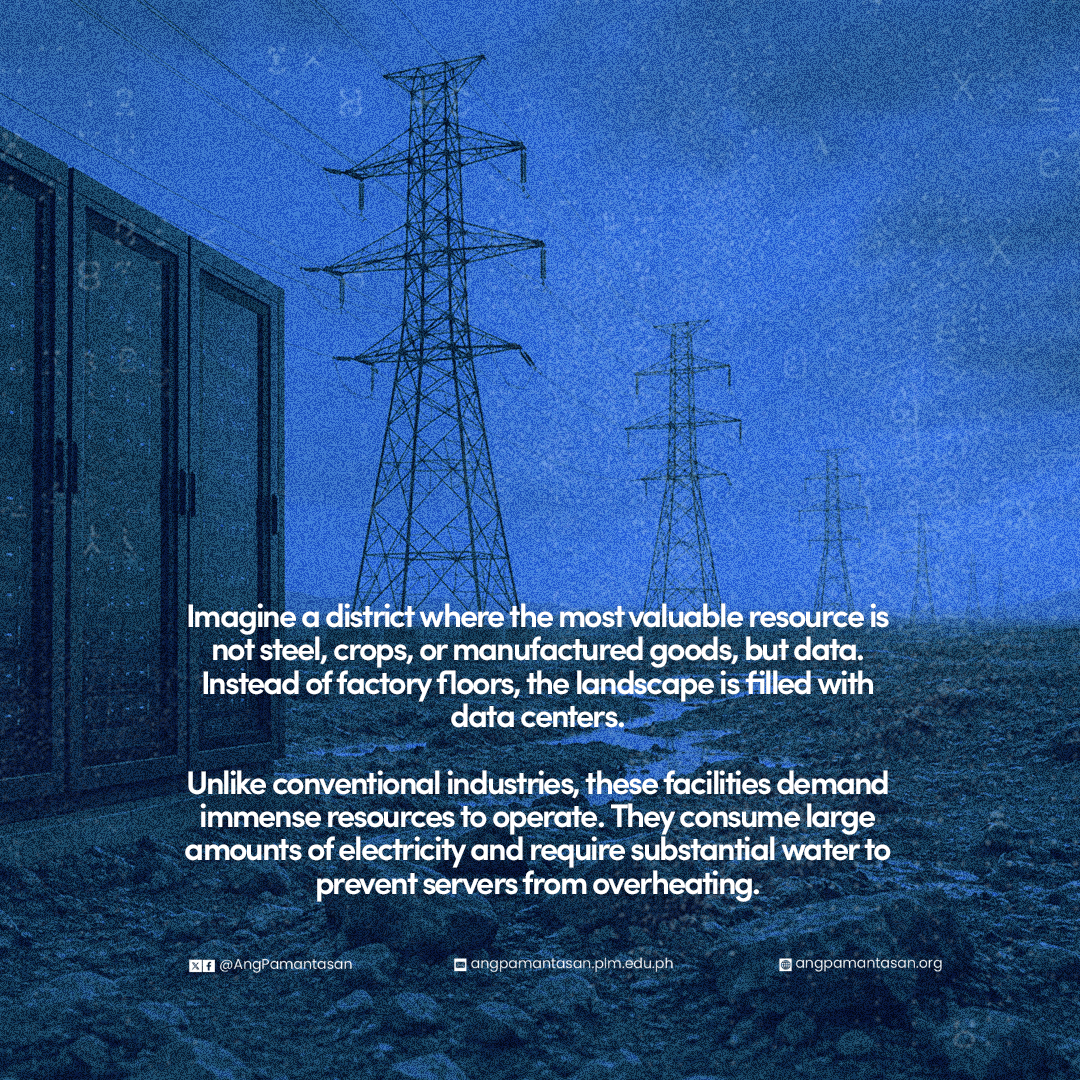
Imagine a district where the most valuable resource is not steel, crops, or manufactured goods, but data. Instead of factory floors, the landscape is filled with data centers; large facilities that house thousands of servers working around the clock to power artificial intelligence, cloud computing, and the digital services people rely on every day.
Unlike conventional industries, these facilities demand immense resources to operate. They consume large amounts of electricity and require substantial water to prevent servers from overheating. While they leave no smokestacks behind, their footprint is measured in energy, water, and land.
In a country where farmers continue to struggle with rising production costs and unpredictable harvests, the question is not simply whether AI is the future. It is whether the pursuit of that future leaves enough room for the sectors that continue to feed the nation.
For supporters, these costs are part of building a future-ready economy. For critics, these raise a different question: in a country where food security, water access, and agricultural productivity remain as pressing concerns, how should these resources be prioritized?
It is this tension between technological ambition and national priorities that transforms Pax Silica from an investment proposal into a national conversation. But before asking whether Pax Silica is good or bad, perhaps we should ask: why is it happening now?
The Race for Tomorrow
The answer begins far beyond our borders.
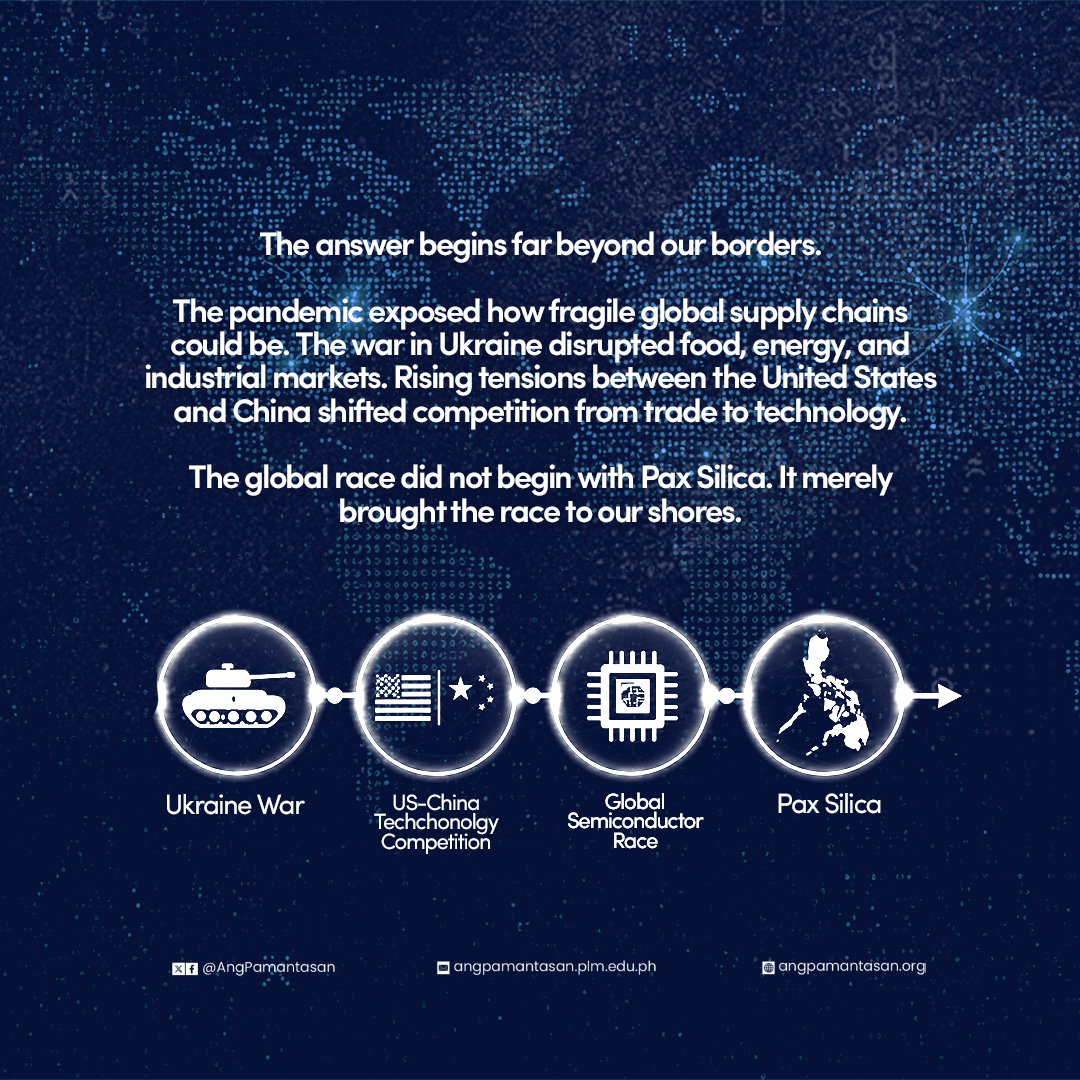
The pandemic exposed how fragile global supply chains could be. The war in Ukraine disrupted food, energy, and industrial markets. Rising tensions between the United States and China shifted competition from trade to technology. Artificial intelligence, semiconductor production, and critical minerals have become matters of national security as much as economic growth.
Today's race is not just about building better gadgets. It is about deciding who controls the technologies that power economies, militaries, and everyday life.
This is why countries are looking for trusted partners to strengthen their supply chains. Among the most active is the United States, which has been strengthening its technology partnerships with allies and long-standing security partners across the Indo-Pacific as competition with China increasingly shifts toward semiconductors, artificial intelligence, and other critical technologies.
And this is where the Philippines enters the picture.
With a thriving semiconductor industry, abundant critical minerals essential to chip manufacturing, a strategic location in the Indo-Pacific, and long-standing ties with the United States, the country has become more important than it was a decade ago. Those ties are rooted in decades of defense and economic cooperation, from the former U.S. military presence in Subic and Clark to the annual Balikatan exercises that continue today.
The global race did not begin with Pax Silica. It merely brought the race to our shores.
The Silicon Promise
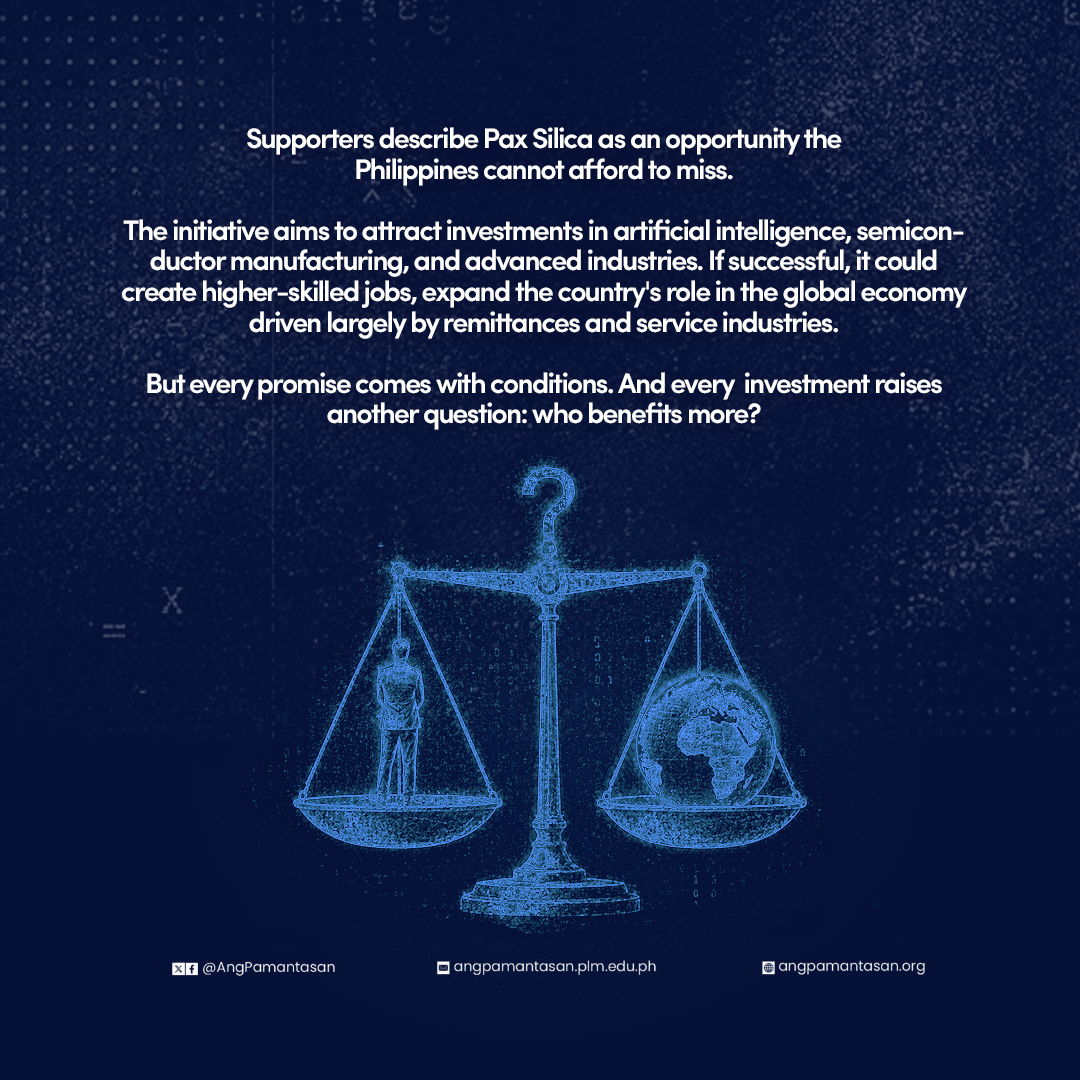
Supporters describe Pax Silica as an opportunity the Philippines cannot afford to miss.
The initiative aims to attract investments in artificial intelligence, semiconductor manufacturing, and advanced industries. If successful, it could create higher-skilled jobs, expand the country's role in the global technology sector, and reduce its dependence on an economy driven largely by remittances and service industries.
In many ways, the vision is appealing. Every nation wants to participate in the industries shaping the future rather than simply consuming the technologies others create.
But every promise comes with conditions. And every investment raises another question: who benefits more?
When Progress Meets Politics
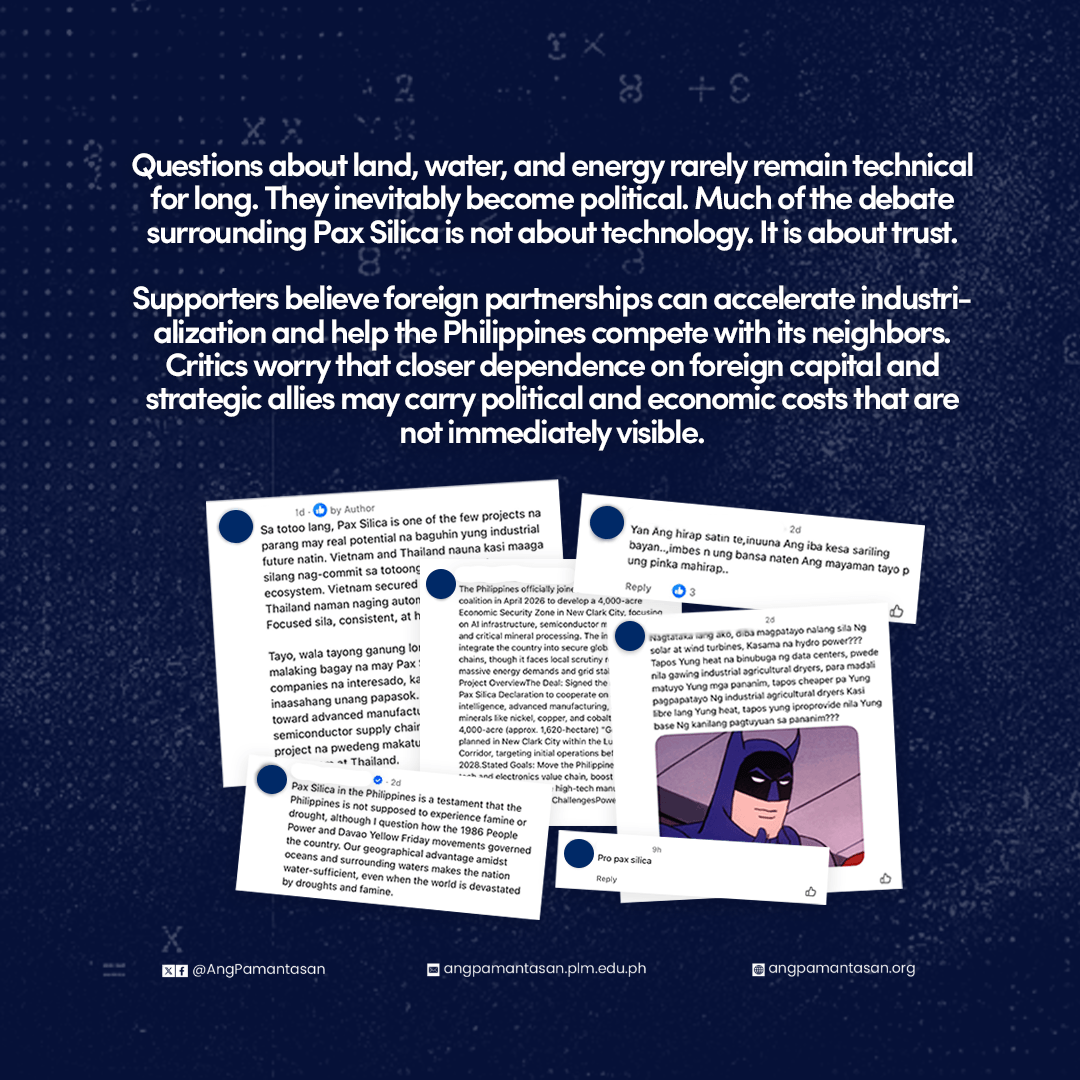
Questions about land, water, and energy rarely remain technical for long. They inevitably become political. Much of the debate surrounding Pax Silica is not about technology. It is about trust.
The question of who benefits more is difficult to ignore. The United States has made no secret of its intention to secure critical technologies, describing semiconductor leadership as vital to its national security and economic future.
Supporters believe foreign partnerships can accelerate industrialization and help the Philippines compete with its neighbors. Critics worry that closer dependence on foreign capital and strategic allies may carry political and economic costs that are not immediately visible.
There is also the question of governance.
If both countries stand to benefit, the greater challenge lies in ensuring that Philippine institutions can negotiate on equal footing. The success of Pax Silica will depend not only on the investments it attracts, but on the institutions that oversee them. Protecting national interests, enforcing environmental and labor safeguards, and translating technology into meaningful opportunities for Filipino workers will ultimately determine whether the country moves up the global value chain or remains at its margins.
These concerns are not arguments against development. They are reminders that development is only as strong as the institutions that oversee it.
The Question We Should Be Asking
Public discussion has often reduced Pax Silica to two opposing narratives. One sees it as the country's gateway to progress. The other sees it as a threat to sovereignty. Neither tells the whole story.
The real question is whether the country can pursue that development on terms that genuinely serve Filipinos.
That means asking difficult questions before celebrating ambitious promises. What safeguards are in place? Who benefits from the investment? What happens if political priorities change? How do we ensure that today's agreements still protect the public interest decades from now?
These are questions that belong not only in government offices but also in classrooms, in communities, and in public conversations.
Before History Decides
Perhaps the defining moments of a nation are not the ones remembered in textbooks, but the ones ordinary people almost overlook.
Pax Silica may one day be remembered as the project that changed the country's course, for better or for worse. Today, it is still a decision whose consequences have yet to be written.
The question is not what tomorrow will say about this moment.
It is whether we asked enough of it while it was still ours to shape.