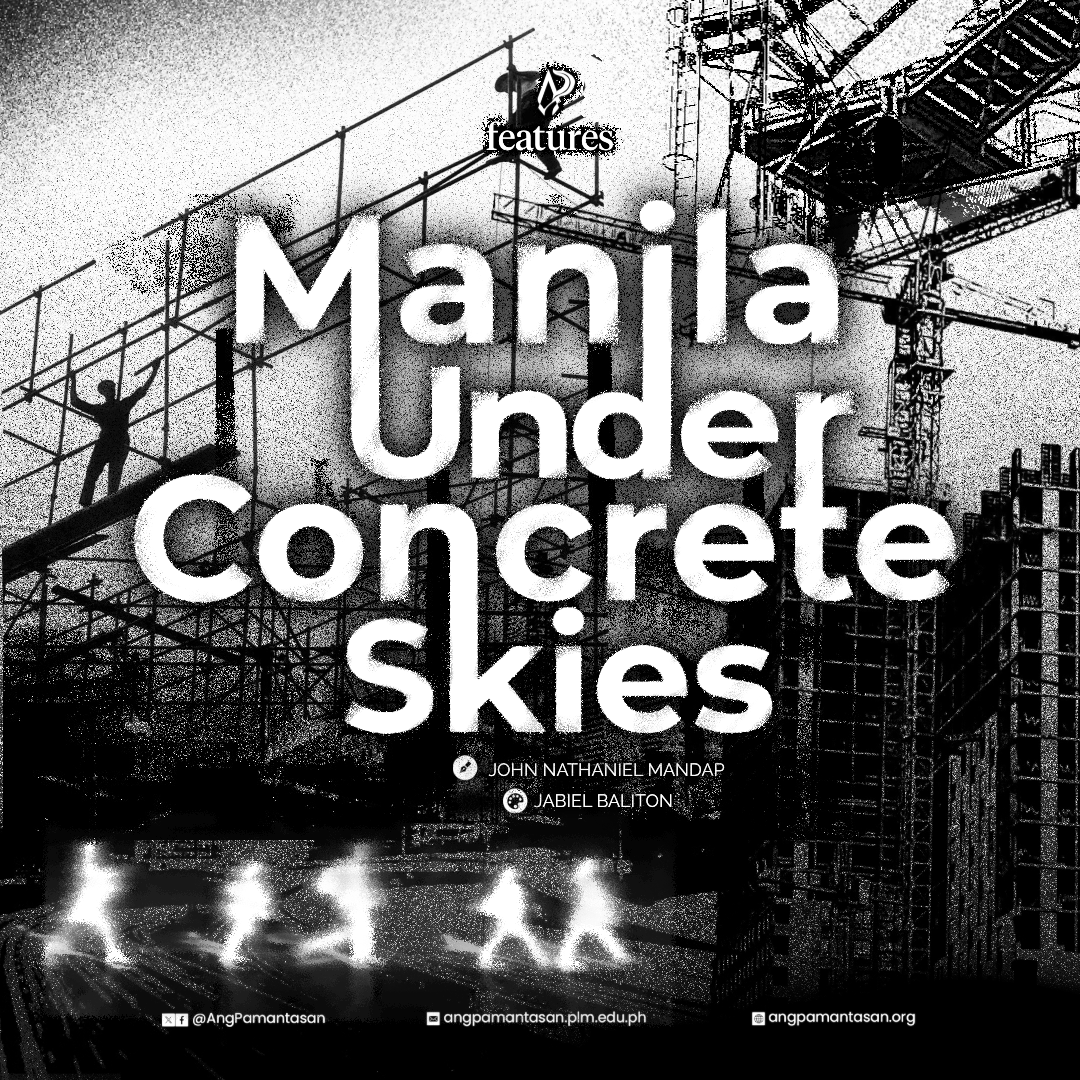
Manila Under Concrete Skies
Written by John Nathaniel Mandap • Boards by Jabiel Baliton | 11 July 26
The first things to disappear were the trees.
Along stretches of Quirino Avenue in Manila, decades-old acacia and other mature street trees once formed one of the city’s last continuous green corridors. In recent months, chainsaws and excavation equipment have begun replacing that canopy, which long softened the district’s heat. For some, the clearing signals infrastructure progress. For others, it marks another step in the steady erosion of Manila’s remaining urban green space.
At the center of the issue is the Southern Access Link Expressway (SALEX), a proposed elevated expressway project by the San Miguel Corporation (SMC). It is designed to connect key corridors across Metro Manila, including routes linked to Roxas Boulevard, the Port Area, and the Skyway system. Government transport agencies, such as the Toll Regulatory Board (TRB), frame it as part of a broader effort to reduce congestion and improve cargo transport across the capital.
Yet opposition from environmental groups, heritage advocates, and urban planners frames SALEX as something far more consequential than a transport project.
The debate is no longer only about traffic. It is about what kind of city Manila is becoming, and what it is willing to lose.
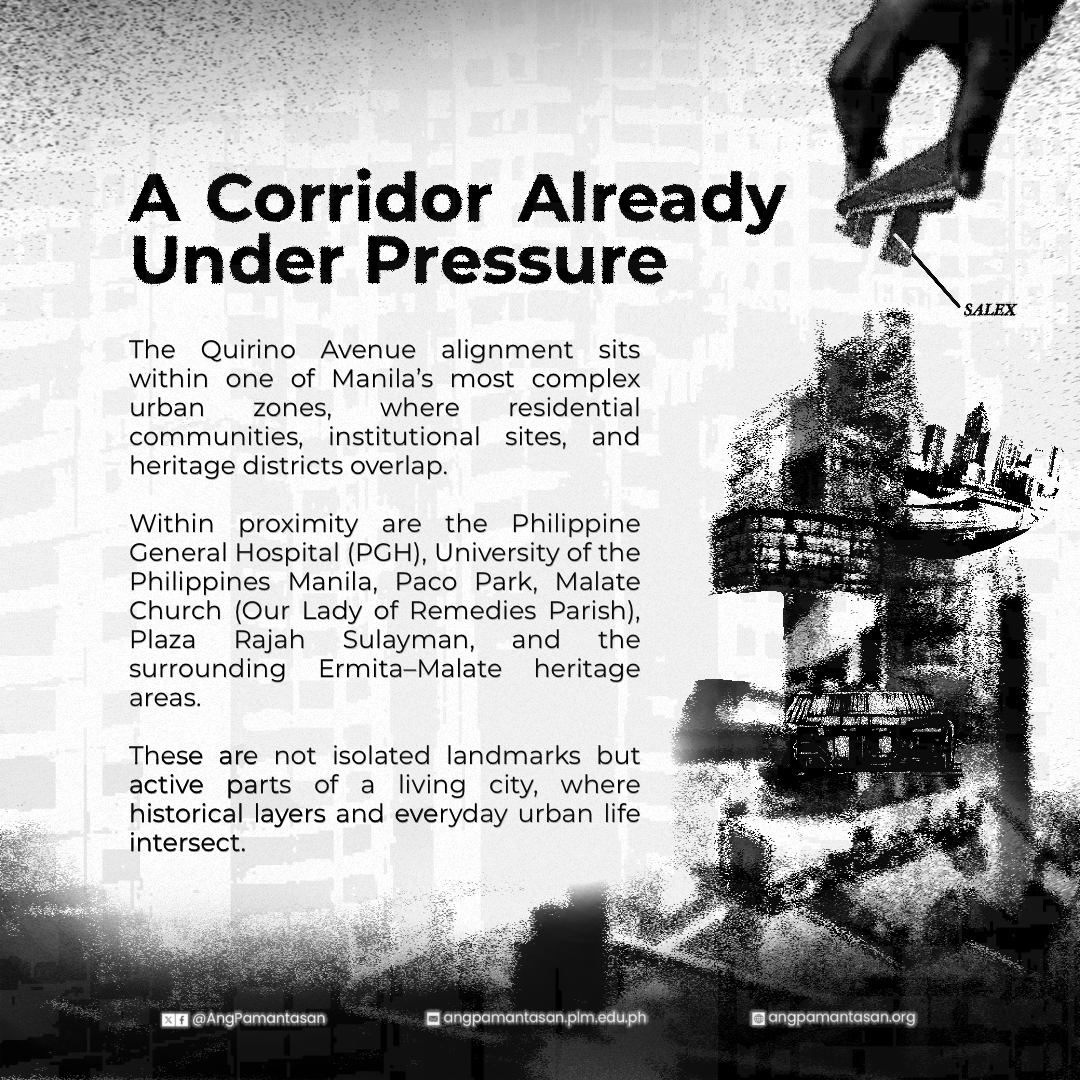
A Corridor Already Under Pressure
The Quirino Avenue alignment sits within one of Manila’s most complex urban zones, where residential communities, institutional sites, and heritage districts overlap.
Within proximity are the Philippine General Hospital (PGH), University of the Philippines Manila, Paco Park, Malate Church (Our Lady of Remedies Parish), Plaza Rajah Sulayman, and the surrounding Ermita–Malate heritage areas. These are not isolated landmarks but active parts of a living city, where historical layers and everyday urban life intersect.
Heritage advocates argue that elevated infrastructure does not need to demolish structures to alter them. In a city already shaped by the Skyway, LRT-1, MRT-3, and multiple flyovers, another elevated viaduct could further compress sightlines and reduce the visual prominence of historic districts in Manila.
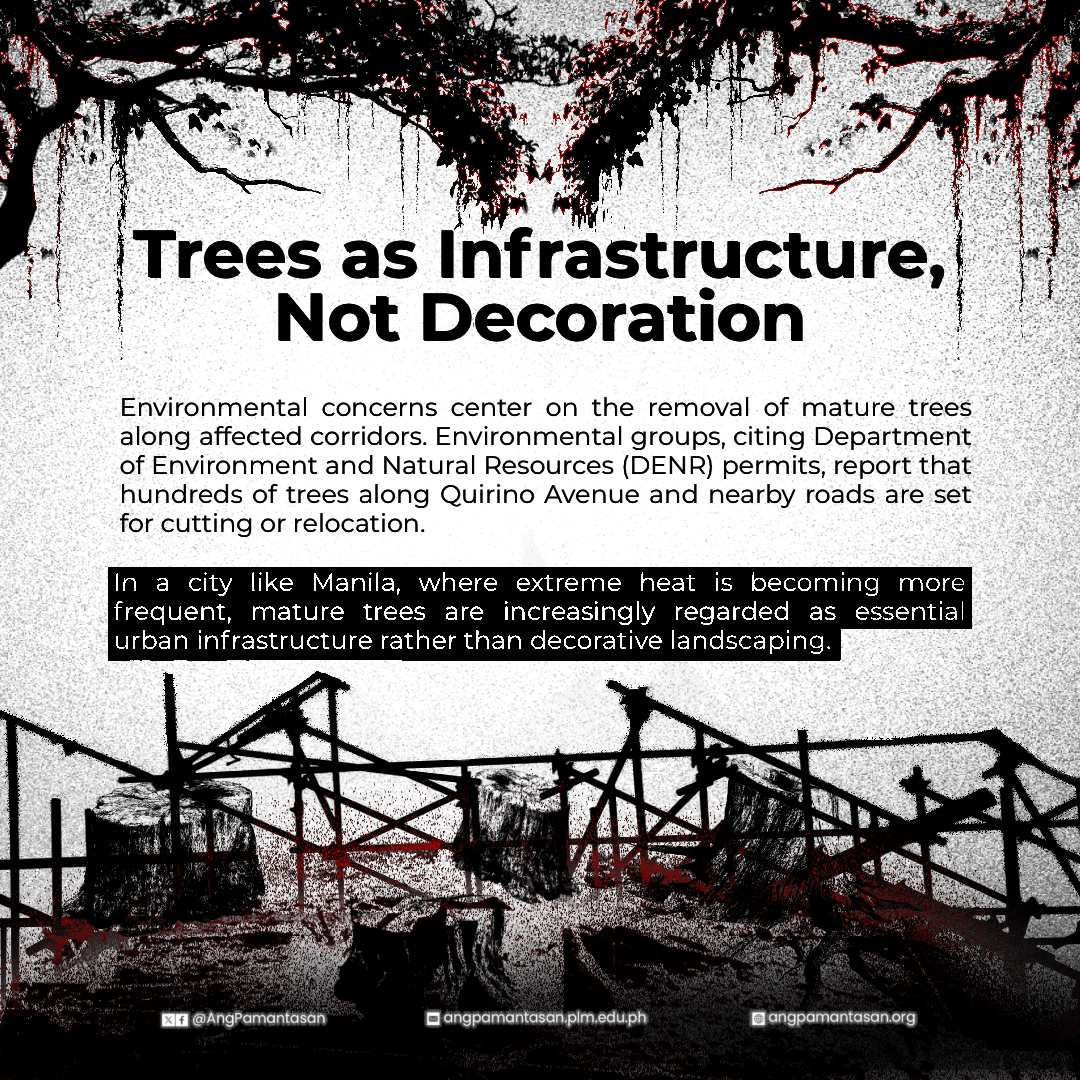
Trees as Infrastructure, Not Decoration
Environmental concerns center on the removal of mature trees along affected corridors. Environmental groups, citing Department of Environment and Natural Resources (DENR) permits, report that hundreds of trees along Quirino Avenue and nearby roads are set for cutting or relocation.
San Miguel Corporation has stated that mitigation measures, including replanting and urban greening programs, are part of the project design.
However, environmental scientists emphasize that replacement planting cannot replicate ecological maturity. This also challenges a common misconception circulating online that older trees are no longer beneficial because they supposedly consume more oxygen than they produce. While mature trees do use energy through respiration, they continue storing carbon, filtering pollutants, providing shade, and regulating urban temperatures. These ecological services develop over decades and cannot simply be replaced by newly planted saplings.
In a city like Manila, where extreme heat is becoming more frequent, mature trees are increasingly regarded as essential urban infrastructure rather than decorative landscaping.
The Induced Demand Problem
Supporters of SALEX argue that Metro Manila simply needs more roads. With freight moving in and out of the Port of Manila and millions navigating the capital each day, expanding road capacity can seem like common sense.
Critics, however, point to a frustrating possibility: what if traffic behaves like a queue that never truly ends?
Transport researchers call this induced demand. A newly opened expressway can feel like finally finding a shorter line at the grocery. For a while, everything moves faster. Then more people notice the line is shorter, switch over, and before long, you're back where you started—only in a different queue.
In this view, roads alone cannot outrun congestion. Lasting solutions depend on giving people alternatives worth choosing: dependable public transportation, communities built around transit, and streets safe enough to walk or cycle through.
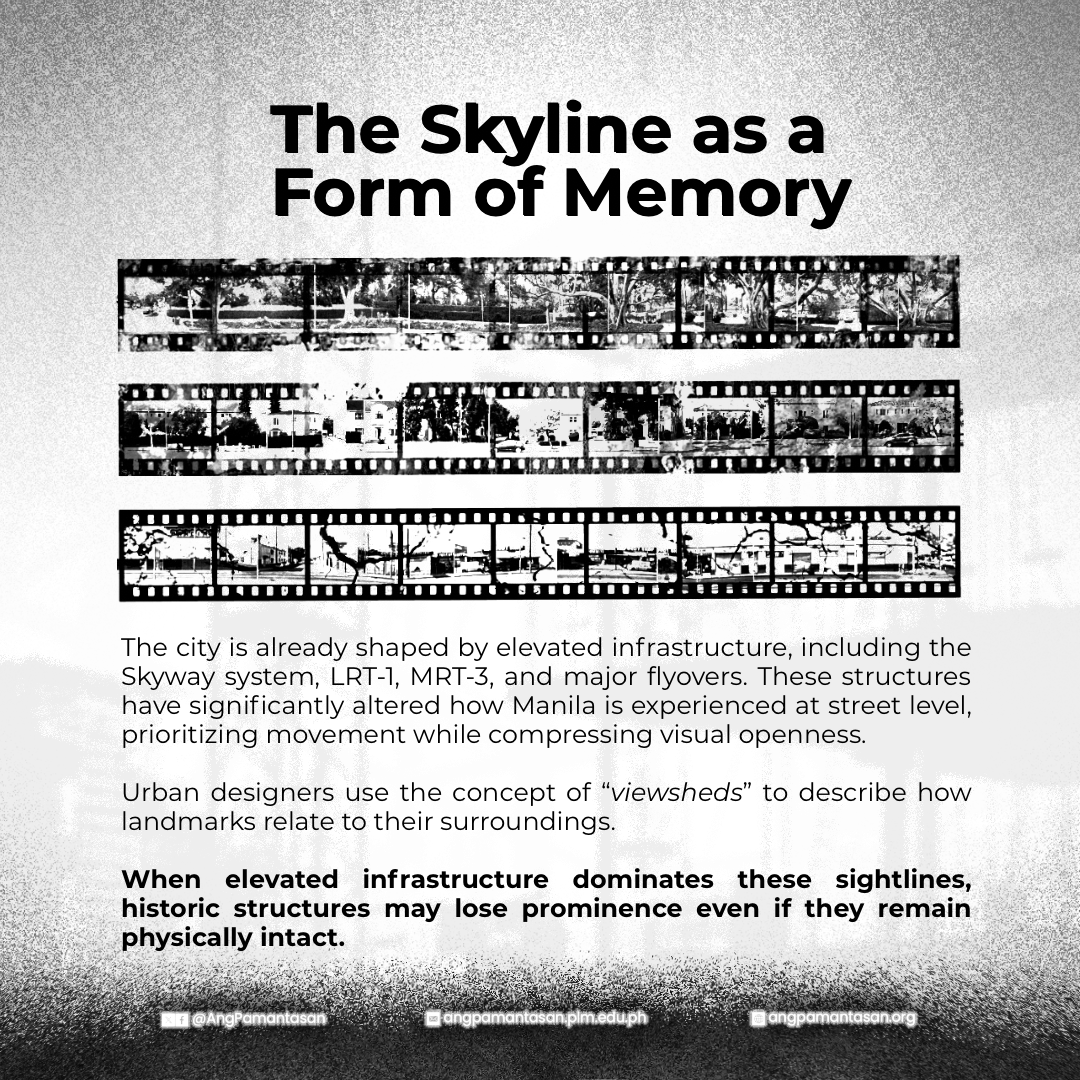
The Skyline as a Form of Memory
Beyond mobility and environmental concerns, SALEX raises questions about Manila’s visual and cultural identity.
The city is already shaped by elevated infrastructure, including the Skyway system, LRT-1, MRT-3, and major flyovers. These structures have significantly altered how Manila is experienced at street level, prioritizing movement while compressing visual openness.
Urban designers use the concept of “viewsheds” to describe how landmarks relate to their surroundings. When elevated infrastructure dominates these sightlines, historic structures may lose prominence even if they remain physically intact.
This is particularly relevant in districts like Malate and Ermita, where churches, pre-war architecture, and civic spaces still stand. Critics argue that additional expressways risk overwhelming the visual identity of these heritage zones, including areas surrounding Malate Church, Paco Park, and institutional landmarks near UP Manila and the Philippine General Hospital.
Climate Adaptation in a Warming City
The city faces recurring heat, flooding, and increasingly erratic rainfall patterns. In this context, urban greenery plays a direct role in cooling, drainage, and air quality regulation.
Environmental groups argue that reducing tree cover while expanding concrete infrastructure creates a contradiction in climate adaptation planning.
In a warming city, the removal of mature trees affects not only aesthetics but also resilience against extreme weather conditions. The loss is not symbolic; it is functional.
The Question Beneath the Concrete
San Miguel Corporation and supporting infrastructure planners maintain that SALEX is necessary for economic growth, mobility improvement, and regional connectivity. They point to Metro Manila's congestion, cargo transport, and port access requirements as justification for expanded expressway capacity.
Opponents do not dispute these pressures. Instead, they question whether expanding expressways remains the most effective long-term response.
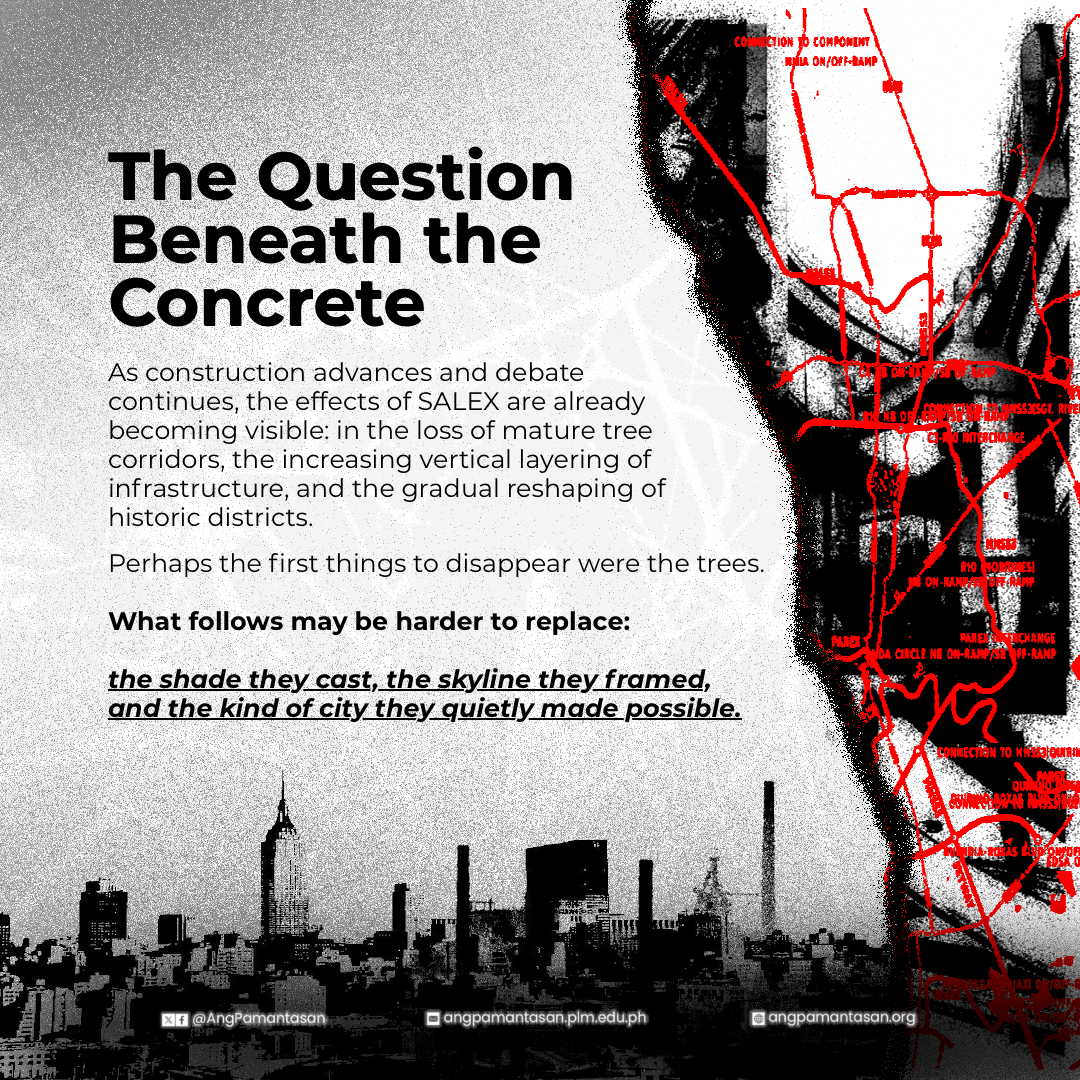
As construction advances and debate continues, the effects of SALEX are already becoming visible: in the loss of mature tree corridors, the increasing vertical layering of infrastructure, and the gradual reshaping of historic districts.
The question, then, is whether Metro Manila should continue expanding through elevated road infrastructure, or whether it is approaching a point where additional concrete diminishes the very livability it seeks to improve.
Perhaps the first things to disappear were the trees. What follows may be harder to replace: the shade they cast, the skyline they framed, and the kind of city they quietly made possible.