SOPA 2026: What’s Next for PLM?
Written by Marian Sophia Carreon • Boards by Brent Fernandez | 10 June 26
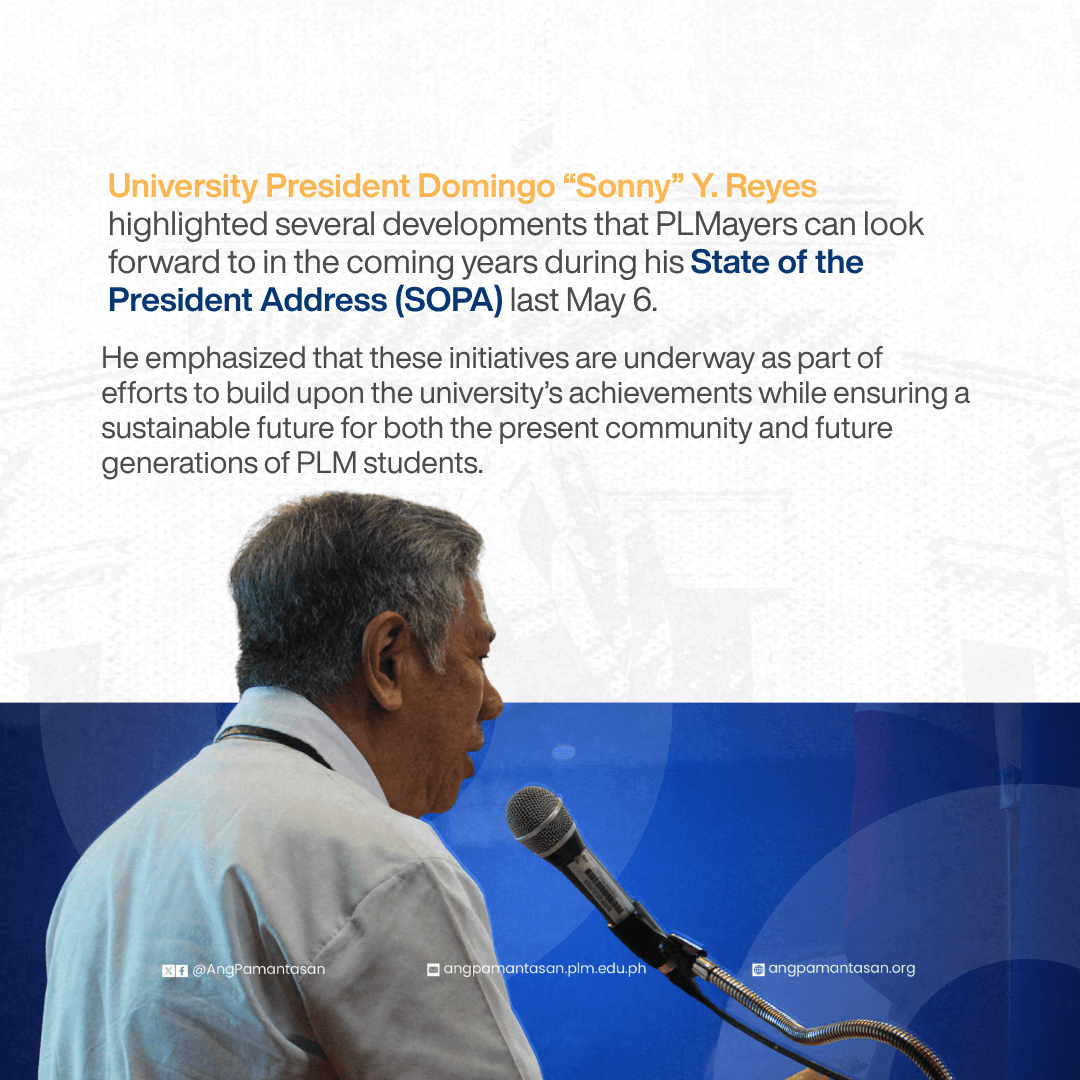
University President Domingo “Sonny” Y. Reyes highlighted several developments that PLMayers can look forward to in the coming years during his State of the President Address (SOPA) last May 6.
He emphasized that these initiatives are underway as part of efforts to build upon the university’s achievements while ensuring a sustainable future for both the present community and future generations of PLM students.
New LMS for the next academic year
Upon starting his term, Pres. Sonny said he immediately noticed how the university was behind when it came to technology, urging him to request increased subsidy from the City Hall to address the growing need to transition from a “full manual to a fully digitalised environment.” This began with developing the enterprise resource program (ERP) in 2024, which links offices together on a student's information from application to graduation.
Following up on these efforts, he announced that the university has begun training for a new learning management system (LMS). “Sinimulan na po ang training for the new LMS, ang Canvas. Ito ay kahalintulad ng LMS ng ibang mga unibersidad sa Manila.”
Being integrated into the ERP, he stated that Canvas would allow students more ease in accessing and uploading files, wherein the algorithm would accommodate them better during blended learning.
Simultaneous release of Diplomas and TOR for Batch 2026
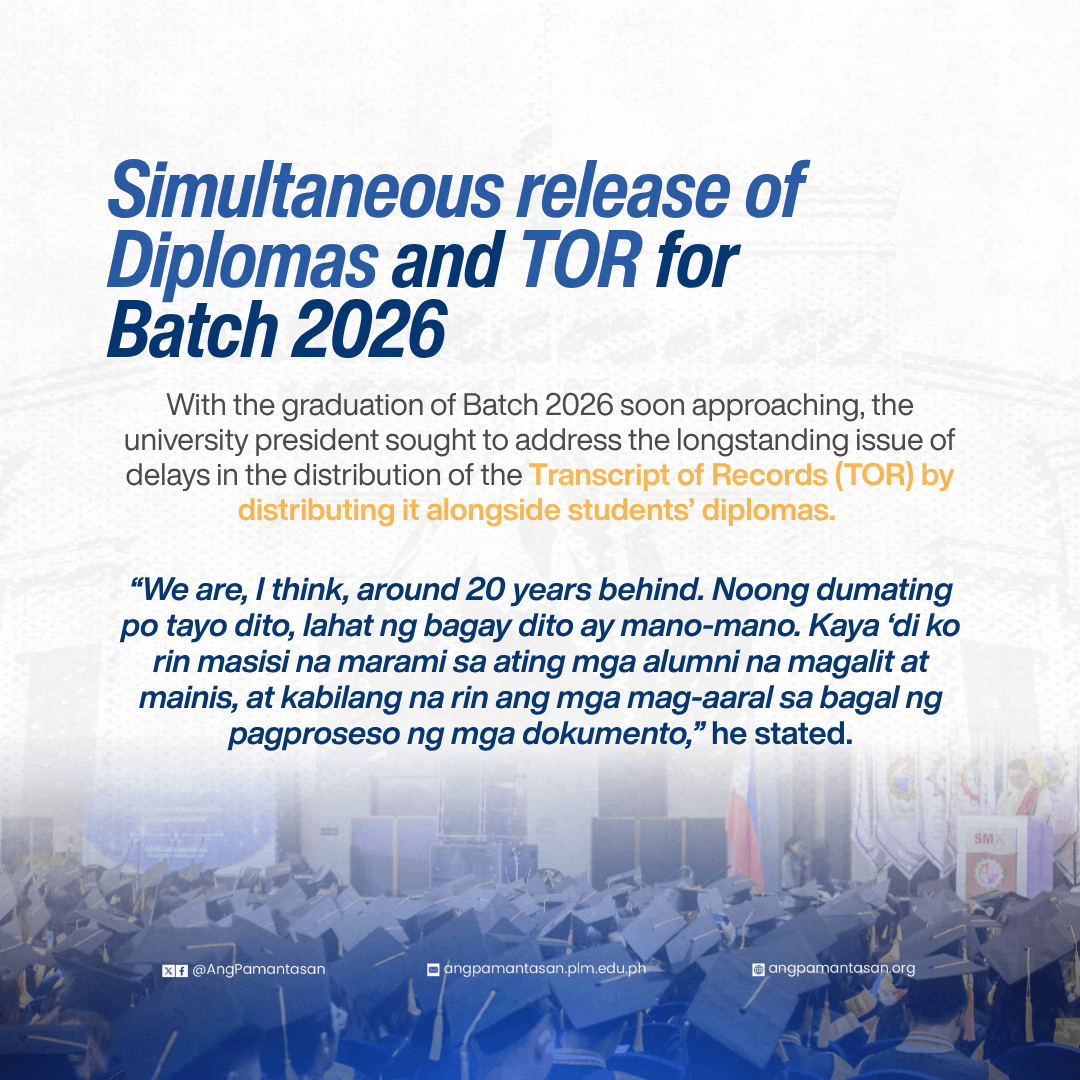
With the graduation of Batch 2026 soon approaching, the university president sought to address the longstanding issue of delays in the distribution of the Transcript of Records (TOR) by distributing it alongside students’ diplomas.
“We are, I think, around 20 years behind. Noong dumating po tayo dito, lahat ng bagay dito ay mano-mano. Kaya ‘di ko rin masisi na marami sa ating mga alumni na magalit at mainis, at kabilang na rin ang mga mag-aaral sa bagal ng pagproseso ng mga dokumento,” he stated.
According to the president, further enhancements are in progress, expressing optimism despite a delayed timeline.
New building, new programs
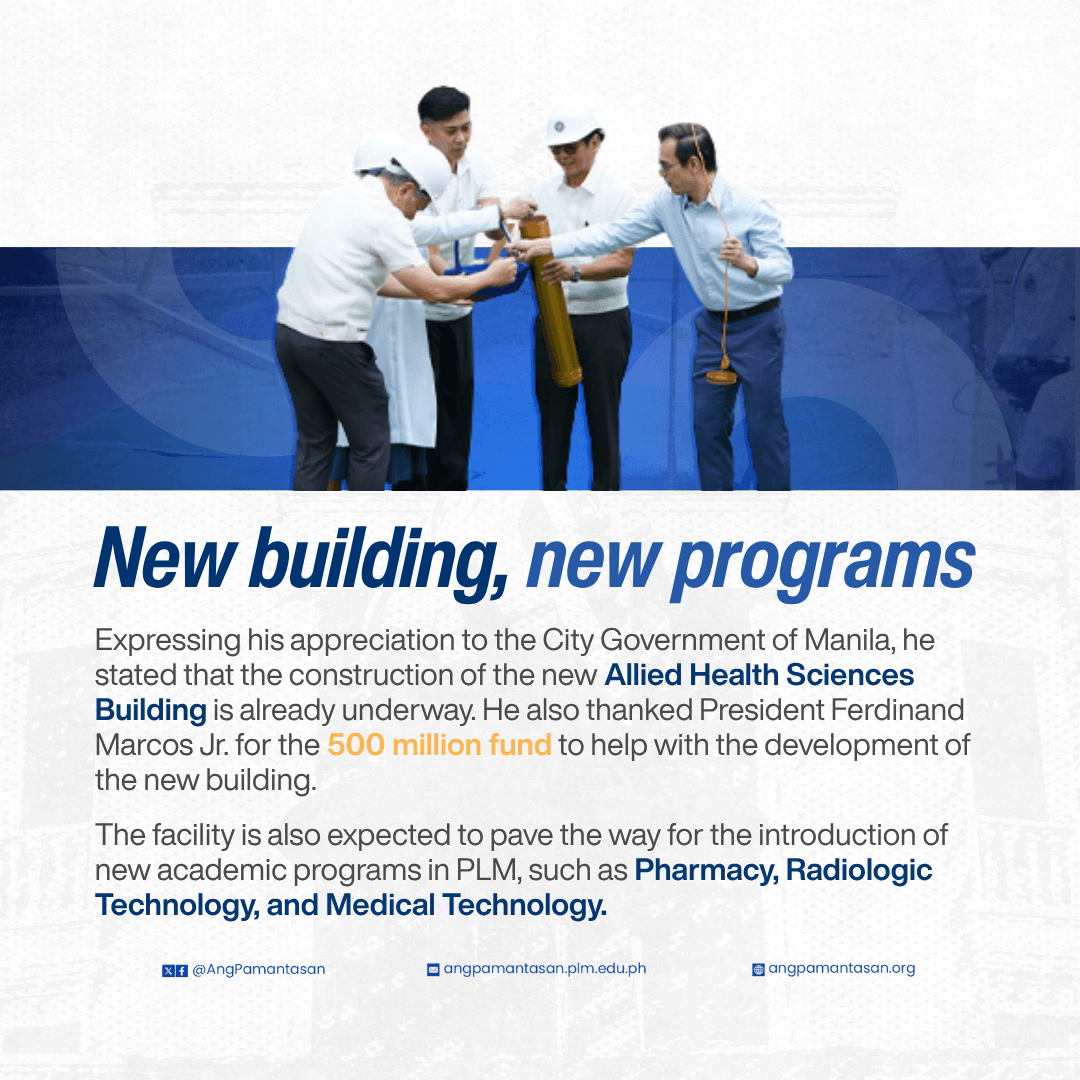
Expressing his appreciation to the City Government of Manila, he stated that the construction of the new Allied Health Sciences Building is already underway. He also thanked President Ferdinand Marcos Jr. for the 500 million fund to help with the development of the new building.
It is expected to finish construction by 2027 and officially open its doors to students by 2028, as promised by Manila City Mayor Francisco “Isko” Moreno Domagoso.
The facility is also expected to pave the way for the introduction of new academic programs in PLM, such as Pharmacy, Radiologic Technology, and Medical Technology.
Pursuing additional appropriations from the national gov’t
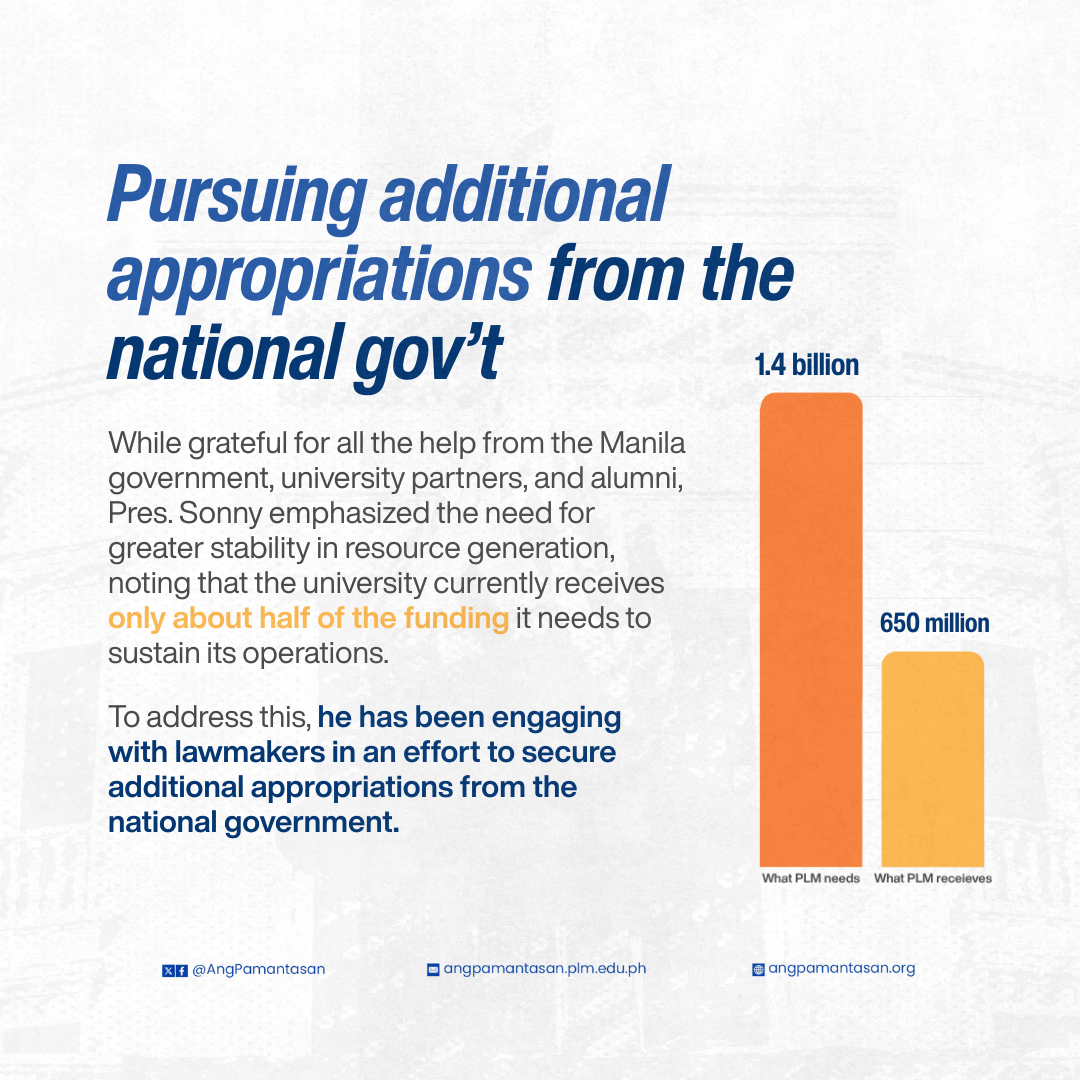
While grateful for all the help from the Manila government, university partners, and alumni, Pres. Sonny emphasized the need for greater stability in resource generation, noting that the university currently receives only about half of the funding it needs to sustain its operations.
To address this, he has been engaging with lawmakers in an effort to secure additional appropriations from the national government. “Sa kagandahang-loob ni Senator [Vicente] "Tito" Sotto, naglabas siya ng isang resolusyon na mabigyan tayo ng karagdagang appropriation mula sa national government.”
At the same time, PLM is also seeking added reimbursement from the Commission on Higher Education (CHED) for deficient funding in the previous years.
“Give it a chance”
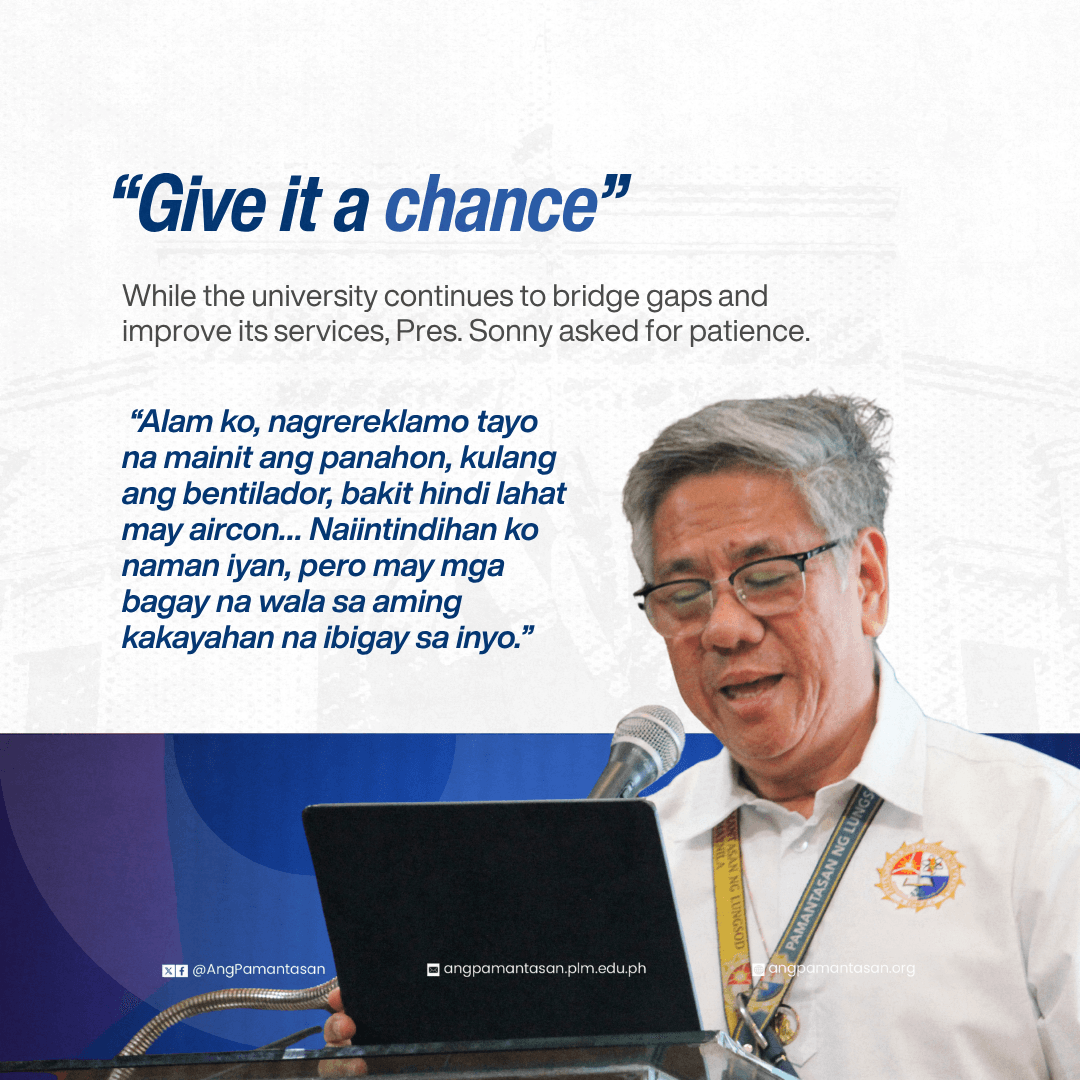
While the university continues to bridge gaps and improve its services, Pres. Sonny asked for patience. “Alam ko, nagrereklamo tayo na mainit ang panahon, kulang ang bentilador, bakit hindi lahat may aircon… Naiintindihan ko naman iyan, pero may mga bagay na wala sa aming kakayahan na ibigay sa inyo.”
He further explained how the facilities in PLM are not enough to accommodate all the students, but they continue to open buildings such as the Gusaling Atienza. “Kung meron naman po kayong mga problema, sana ay makipag-ugnayan kayo sa mga tanggapan na nakakaalam. Hindi ito mareresolba ng social media.”
Furthermore, he said how these difficulties had not always been opened to the community, but expressed the need for transparency and collective action, encouraging students to understand the challenges faced and work together toward solutions.