Too Hot to Ignore
Written by Talitha Dungca • Boards by Jian Muyano | 5 June 26
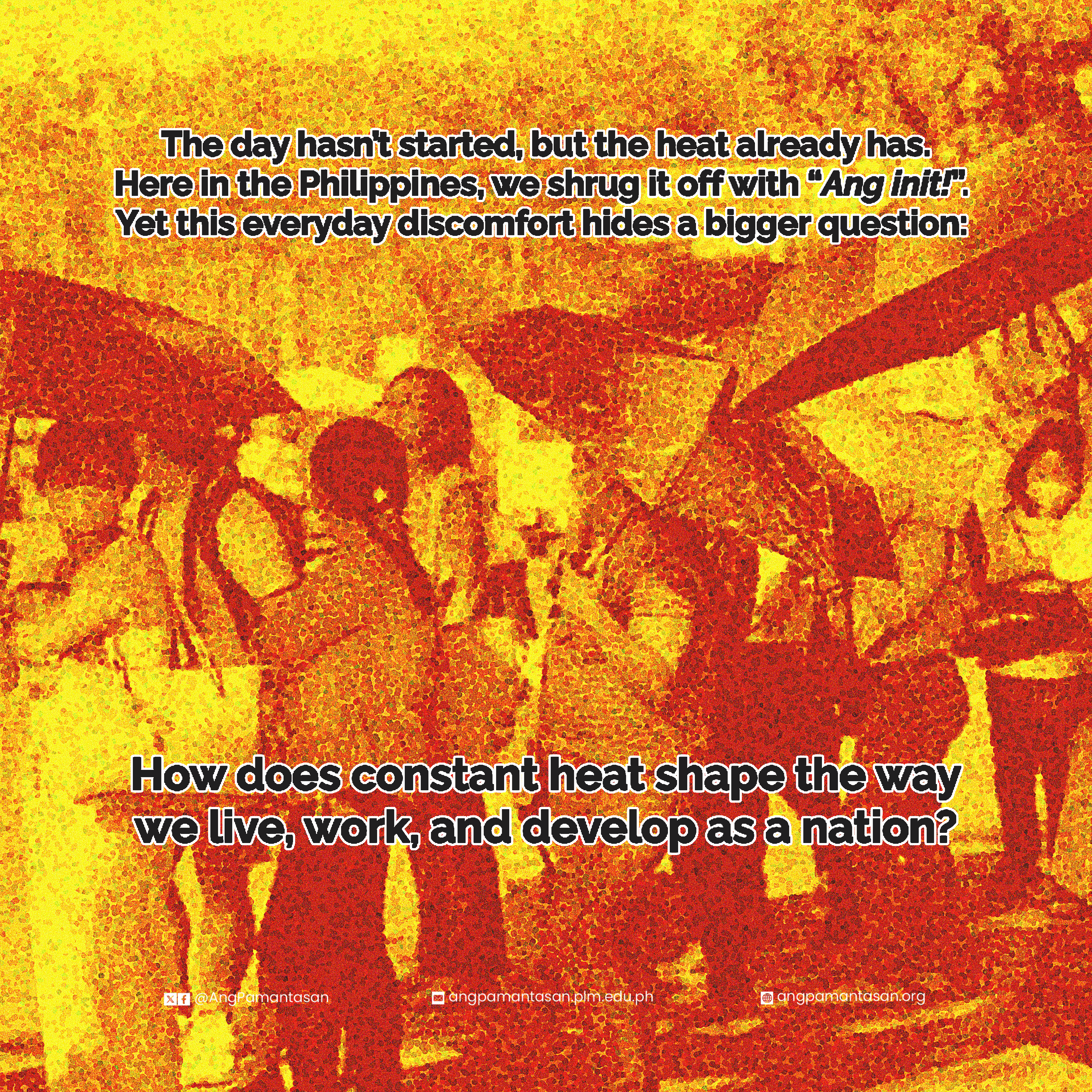
The day hasn’t started, but the heat already has. By seven in the morning, sweat clings to skin, jeepneys crawl, and minifans work overtime. By noon, the heat feels less like weather and more like a personality: loud, persistent, and impossible to ignore.
Here in the Philippines, we shrug it off with “Ang init!”. Yet this everyday discomfort hides a bigger question: how does constant heat shape the way we live, work, and develop as a nation?
This question is not by blaming the weather for everything, but by looking at how heat quietly influences productivity, energy use, health, and even long-term economic outcomes—often in ways we don’t immediately notice.
Heat is not just uncomfortable, it is costly
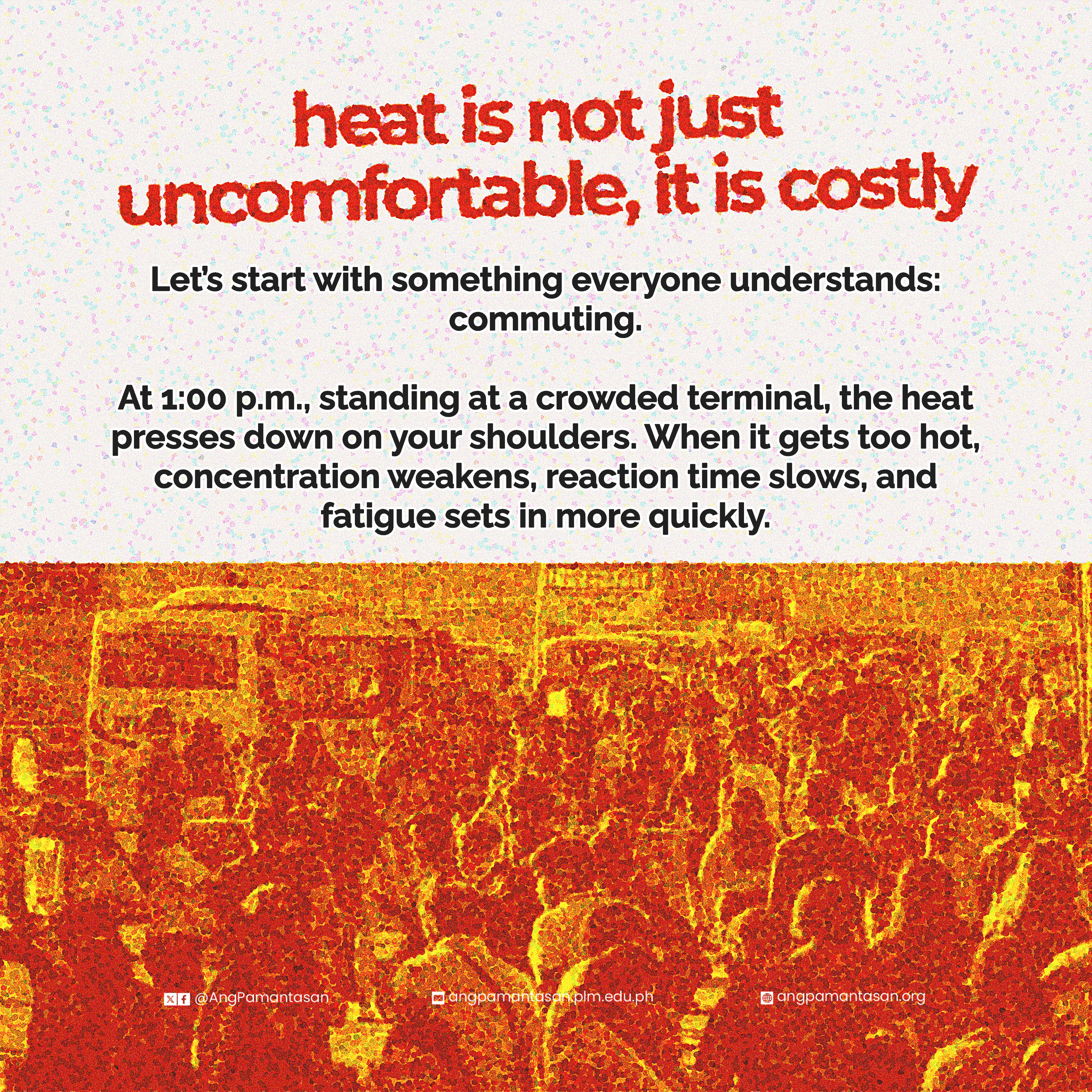
Let’s start with something everyone understands: commuting.
Standing at a crowded terminal at 1:00 p.m., the heat presses down on your shoulders. You are not lazy for feeling drained before you even arrive at work or school. Your body is doing extra labor just to stay cool—sweating, regulating temperature, conserving energy.
Science backs this up. The human body functions best at comfortable temperatures. When it gets too hot, concentration weakens, reaction time slows, and fatigue sets in more quickly. In cooler countries, people often need to “warm up” to get going. In warmer countries like here in the Philippines, people need to cool down just to function normally.
This has real consequences. Tasks take longer. Mistakes increase. Motivation drops, not because people don’t care, but because heat makes sustained mental and physical effort harder.
Health takes a quiet hit
Heat-related illnesses are not always dramatic. It is often subtle: headaches, dehydration, poor sleep, irritability. These may seem minor, but over time, they add up.
Sleep, in particular, matters. On hot nights without adequate ventilation or cooling, quality rest becomes harder. Poor sleep affects memory, mood, and learning. Students struggle to focus. Workers feel burnt out faster.
Again, this is not about individual weakness. It is about living in an environment that constantly asks the body to work overtime just to stay balanced.
Productivity has an air-conditioning price tag
Now think about air-conditioning.
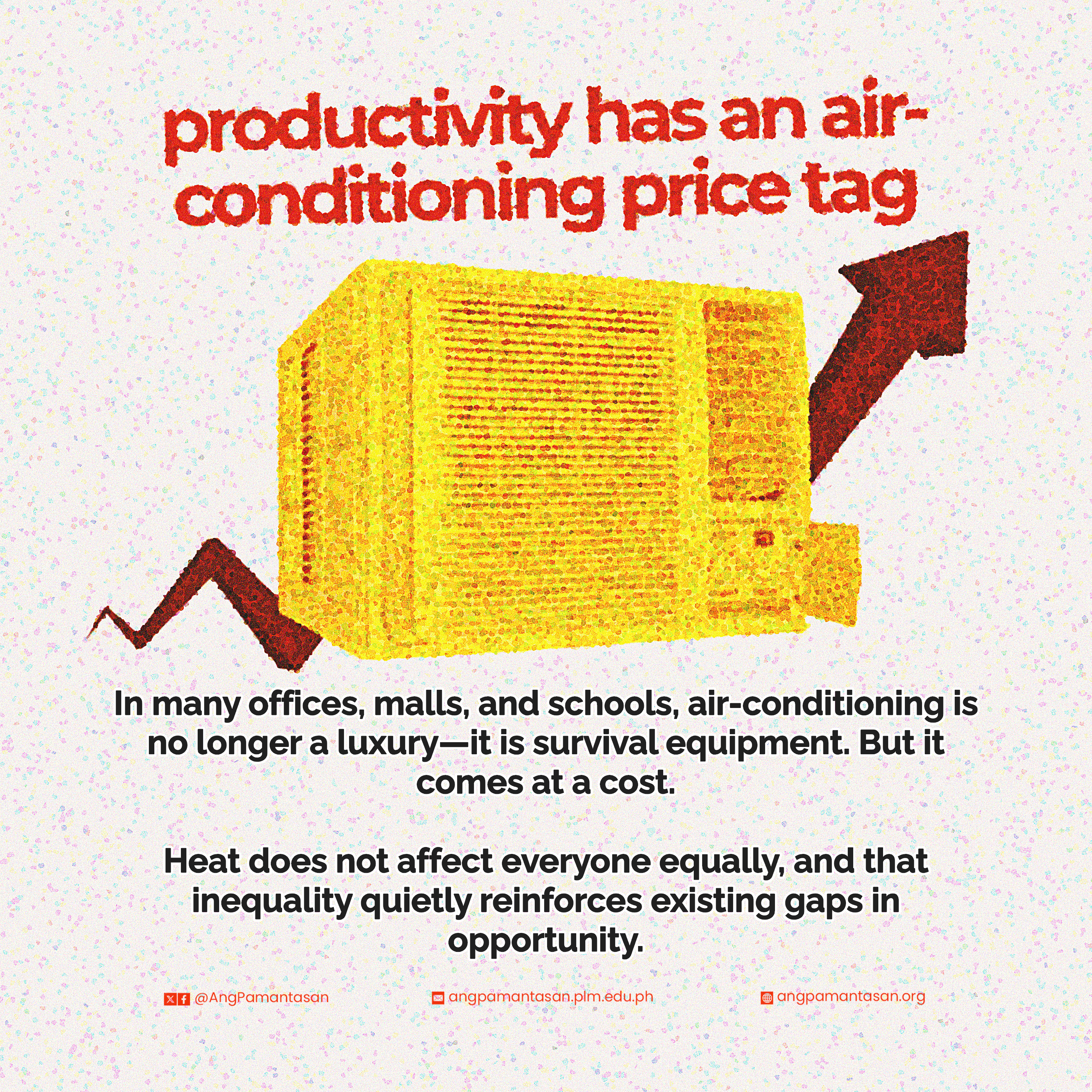
In many offices, malls, and schools, air-conditioning is no longer a luxury—it is survival equipment. But it comes at a cost. Electricity bills rise. Businesses pass costs to consumers. Families must choose between comfort and savings.
For wealthier households, cooling is manageable. For poorer ones, it is not.
A student trying to study in a small, poorly ventilated room faces a different reality than one in an air-conditioned space. A vendor working under the sun all day experiences a different level of exhaustion than an office worker behind glass walls.
Over time, these differences compound. Heat does not affect everyone equally, and that inequality quietly reinforces existing gaps in opportunity.
Heat shapes infrastructure and urban life
In theory, cities are engines of productivity. In practice, tropical cities face unique challenges.
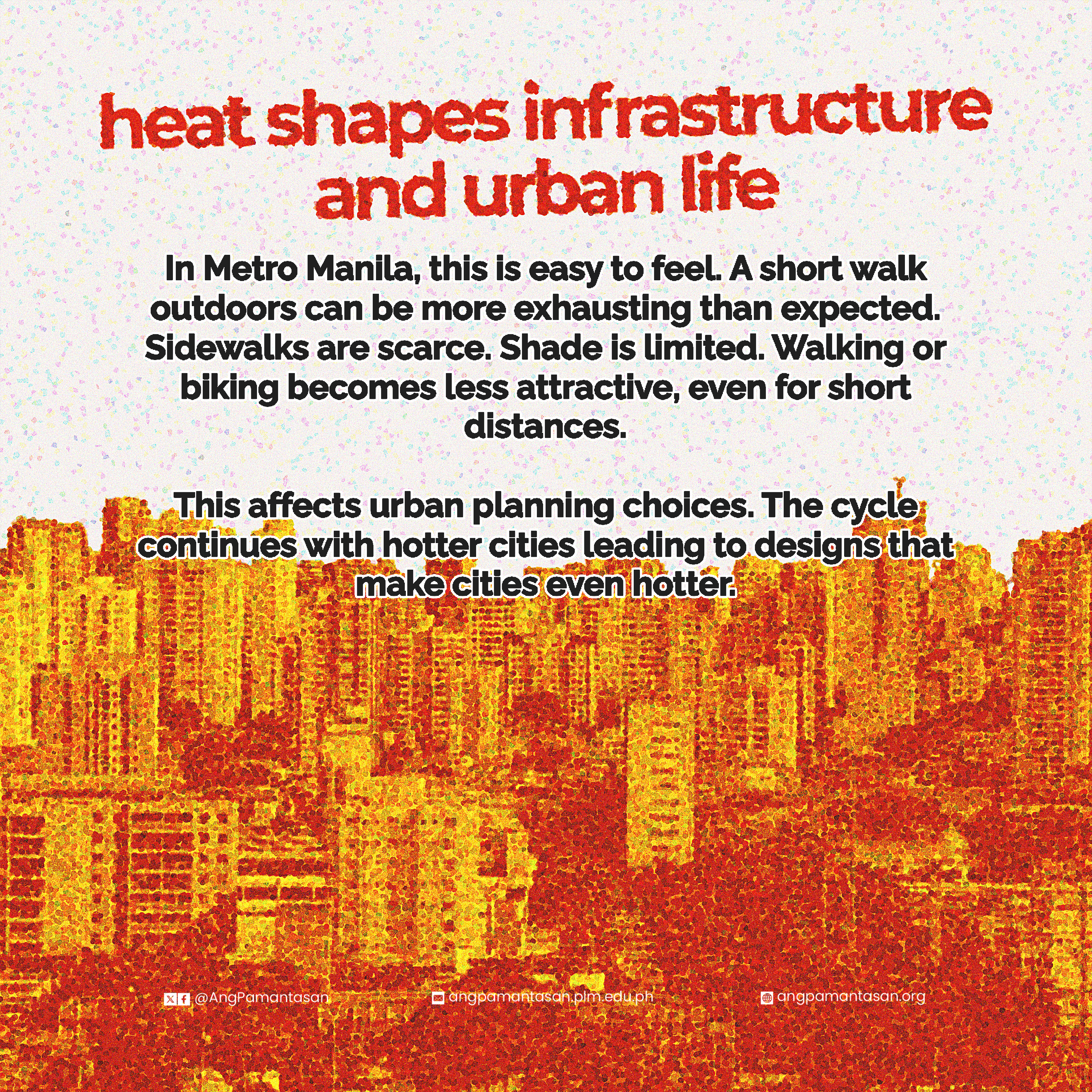
Concrete absorbs heat. Asphalt radiates it back. Trees are cut down for roads and buildings, removing natural cooling. This creates what urban planners call the “urban heat island” effect, where cities become significantly hotter than surrounding areas.
In Metro Manila, this is easy to feel. A short walk outdoors can be more exhausting than expected. Sidewalks are scarce. Shade is limited. Walking or biking becomes less attractive, even for short distances.
This affects urban planning choices. People rely more on motorised transport. Traffic increases. Fuel use rises. Pollution worsens. The cycle continues with hotter cities leading to designs that make cities even hotter.
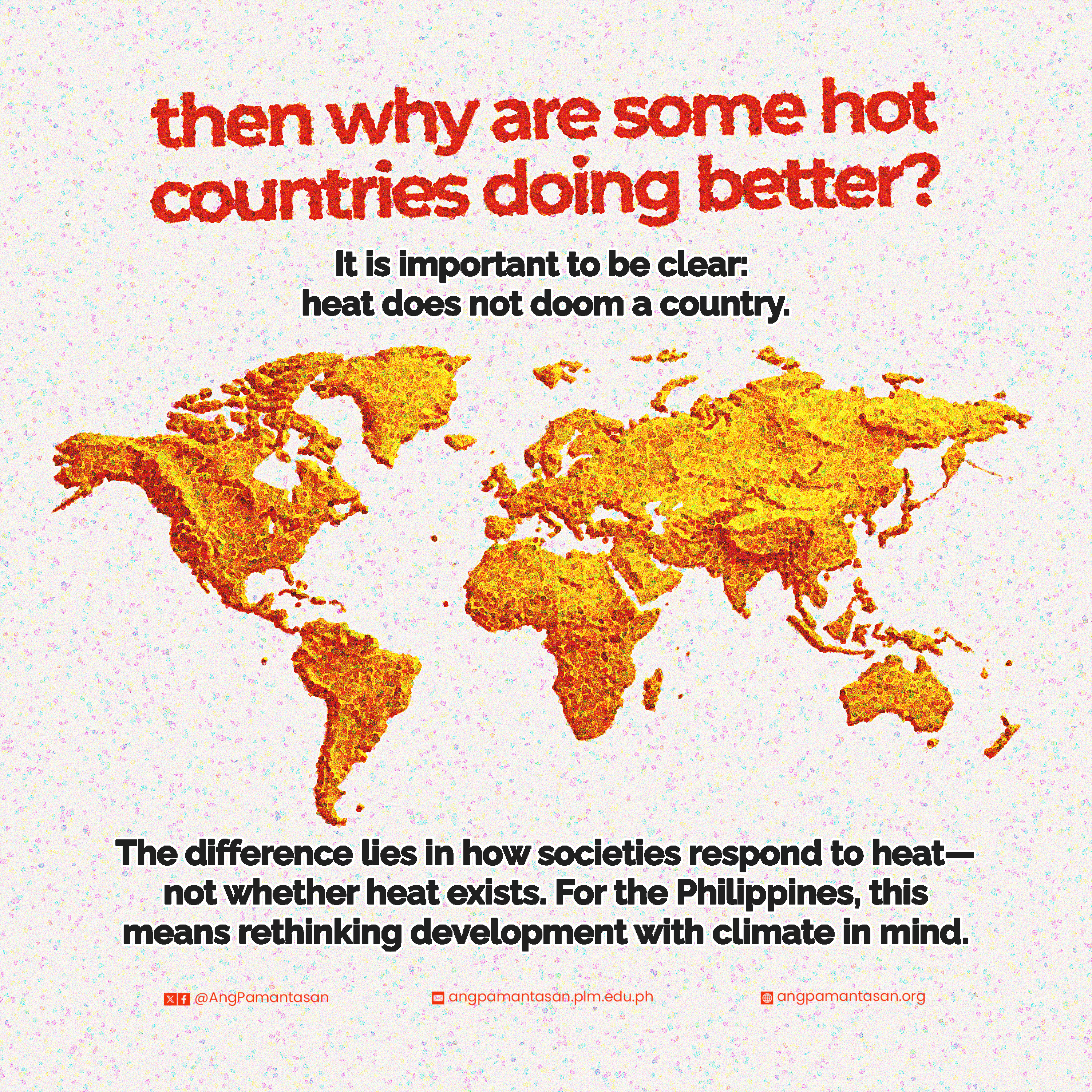
Then why are some hot countries doing better?
It is important to be clear: heat does not doom a country.
Many warm countries have grown rapidly by investing in infrastructure, education, public transport, green spaces, and climate-adapted design. The difference lies in how societies respond to heat—not whether heat exists.
For the Philippines, this means rethinking development with climate in mind. Better ventilation standards. More trees and shaded walkways. Reliable public transport that reduces long exposure to heat. Schools are designed for airflow, not just capacity.
These are not “extras.” They are productivity tools.
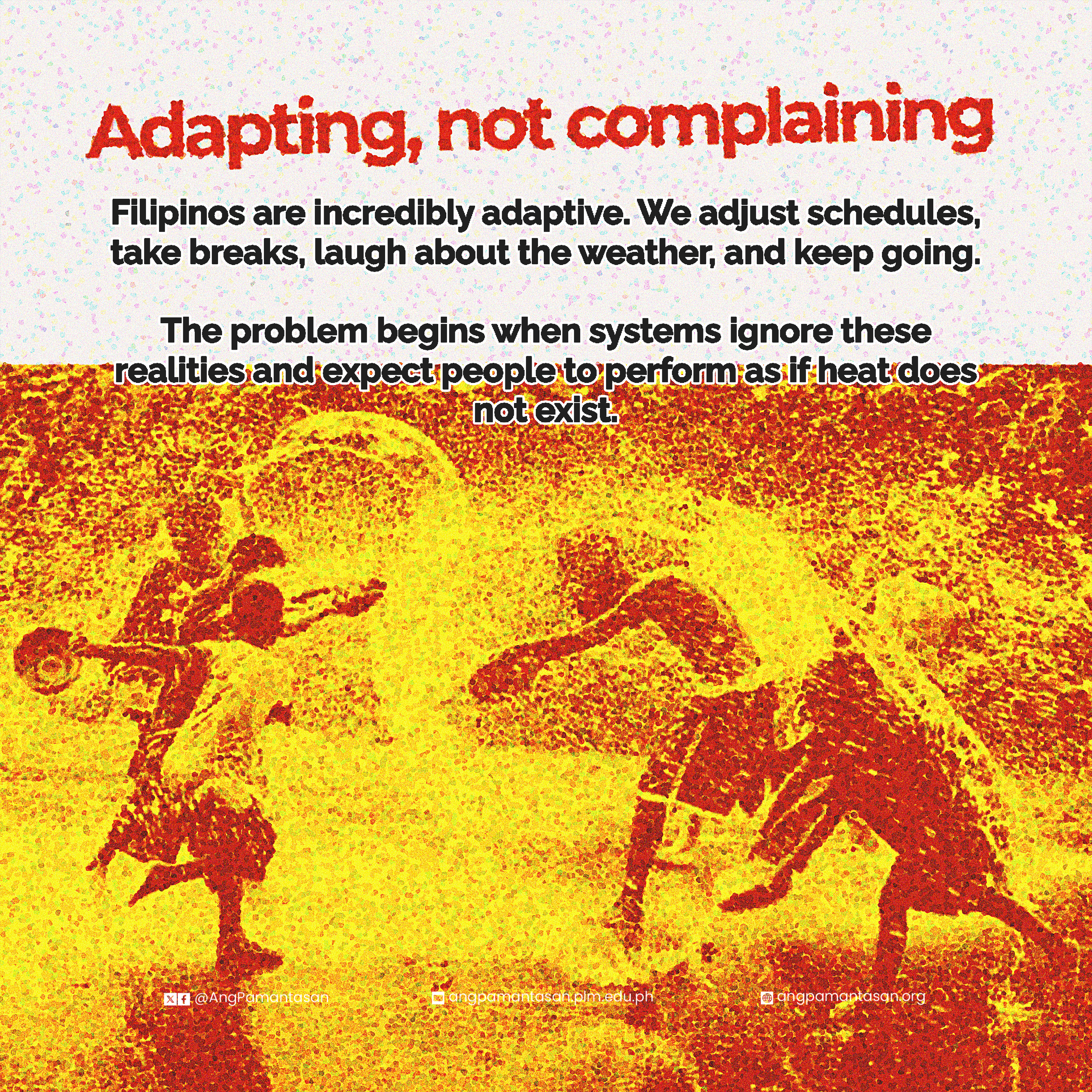
Adapting, not complaining
Filipinos are incredibly adaptive. We adjust schedules, take breaks, laugh about the weather, and keep going. Afternoon siestas, lighter clothing, and flexible routines are not signs of laziness—they are cultural adaptations to climate.
The problem begins when systems ignore these realities and expect people to perform as if heat does not exist.
An academic schedule that assumes constant peak focus. A workday that ignores commute exhaustion. A city design that prioritises cars over shaded sidewalks. These mismatches quietly drain energy from millions of people every day.
Development must feel the weather
The heat in the Philippines is not going away. Climate change suggests it may get worse. The real question is whether development will continue to pretend that heat is just background noise or finally treat it as a central factor in planning.
Because when you zoom in, development is not just about GDP or policies. It is about people standing at jeepney stops, students sweating over notebooks, workers pushing through afternoons that feel longer than they should.
If progress is about helping people do their best work, then understanding the heat they live in is not optional. It is essential.
And maybe the next time we say, “Ang init!” we can mean more than a complaint. We can mean: this matters—and it deserves to be taken seriously.